Clocks Fall Back Nov. 1: How to Handle Darker Drives Home
Clocks fall back Nov. 1, pushing many commutes into the dark. Here's how to see and be seen, check your headlights and stay alert in peak deer season.
By AutoDex Team, Newsroom · 2026-10-20
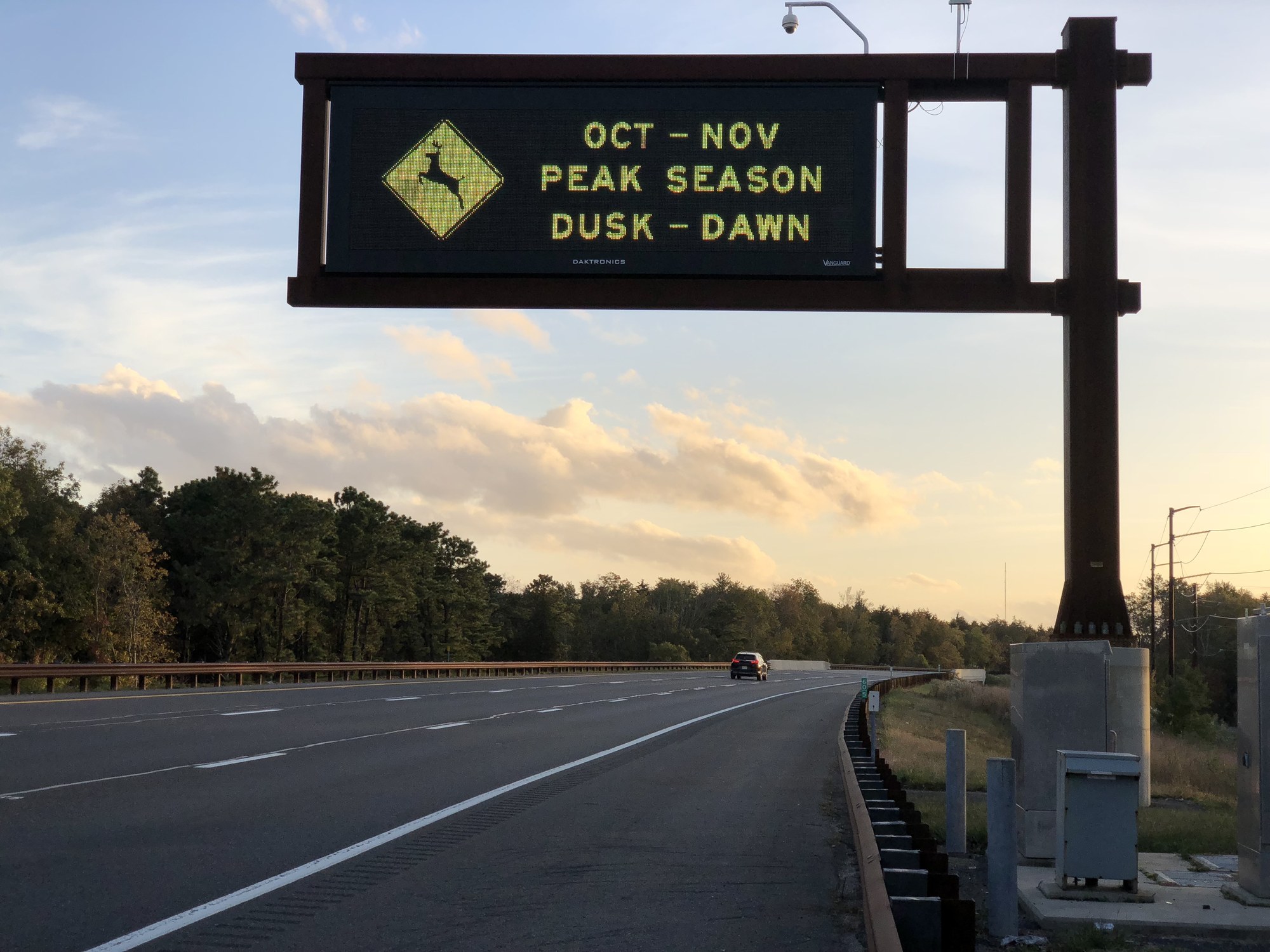
Daylight saving time ends at 2 a.m. local time on Sunday, Nov. 1, when clocks fall back an hour, according to the National Institute of Standards and Technology. Hawaii and most of Arizona sit it out (U.S. Department of Transportation). Everywhere else, sunset comes an hour earlier on the clock, and many drives home that ended in daylight will now end in the dark.
That matters more than it sounds. The National Safety Council says we do only about a quarter of our driving at night, yet half of traffic deaths happen then. Darkness dulls depth perception, color recognition and peripheral vision. Here's how to adjust before the first dark commute.
People on foot are the hardest to see
The Governors Highway Safety Association projects that drivers struck and killed 6,732 people walking in 2025. That's about 18 a day, down 7% from 2024 but still 5% above 2019. GHSA's look at NHTSA's 2024 fatal-crash data found that 76.5% of pedestrian deaths with known lighting conditions happened after dark, with or without streetlights. Just 19.9% happened in daylight. More than 62% happened where there was no sidewalk.
What that means behind the wheel:
- Slow down in neighborhoods, near bus stops and in school zones. NHTSA points out that dusk can start as early as 5 p.m. in many areas after the change, right when kids and commuters are out.
- Treat every crosswalk as occupied until you can see that it isn't, and look again before turning.
- Expect people in dark clothing. NHTSA urges pedestrians to wear reflective gear or carry a flashlight, but plenty won't. On unlit roads, scan the shoulders too.
- Put the phone away. GHSA found that a distracted driver was involved in 21.7% of pedestrian deaths in 2024, up from 15.6% in 2019.
See better: headlights, glass and glare
Headlights vary a lot, and it shows in crash data. The Insurance Institute for Highway Safety found that vehicles with good-rated headlights have 19% fewer nighttime single-vehicle crashes and 23% fewer nighttime pedestrian crashes than those with poor-rated ones. Car shoppers should check the IIHS rating for the specific headlight system on the trim they want.
For the car you already drive:
- Use your high beams when the road is clear. In an IIHS and University of Michigan study, only 18% of drivers who had the road to themselves used them. The difference is big. In one IIHS example, a 2024 Subaru Solterra driver could spot an obstacle 202 feet ahead on low beams and 533 feet ahead on high beams. Dip them for oncoming traffic and when following another car, or let high-beam assist handle it if your car has it.
- Clean the lenses and the windshield, inside and out. The NSC recommends both, along with dimming your dashboard lights.
- Handle glare by looking away from it. The NSC suggests shifting your gaze to the right edge line until the oncoming car passes. If you wear glasses, it recommends anti-reflective lenses.
- Slow down to match what you can see. If you can't stop within the reach of your lights, you're going too fast.
- Get your eyes checked. The NSC, citing the American Optometric Association, says a 50-year-old driver may need twice as much light as a 30-year-old to see as well.
A five-minute headlight check
Headlights fade quietly. In AAA testing, clouded and yellowed lenses from two roughly 11-year-old sedans produced just 22% of the low-beam light of new assemblies. AAA says lenses can start to deteriorate in as little as three to five years. With the average light vehicle on U.S. roads now about 12.9 years old, many cars are well past that (more in our story).
Do this in your driveway at dusk:
- Look at the lenses. If they're yellow or hazy, or the bulb is hard to see through the plastic, AAA says it's time to restore or replace them.
- Cycle through every light. Check low beams, high beams, turn signals, hazards and the license plate light. Have a helper confirm the brake lights.
- Check the aim against a wall. Park on level ground with normal tire pressure and at least half a tank of fuel, then back up so the headlights are about 25 feet from a flat wall, as AAA Club Alliance describes. Turn on the low beams. The two beam patterns should sit at about the same height, with the top edge of each bright zone slightly below the height of the headlight itself. If one beam sits higher than the other, or both shine up into the wall, have the aim checked.
Leave the fixes to a pro. Aim is easy to get wrong, and a beam set too high blinds other drivers. AAA found that DIY and professional lens restoration both brought light output back to about 70% of new, but left more glare than federal criteria allow. Original-equipment replacement assemblies restored 100%, and AAA recommends replacement. A repair shop can tell you which fits your car and budget, and should check the aim after any headlight work.
Peak deer season starts now
The time change also puts more commutes at dusk during the busiest stretch of the year for animal strikes. State Farm estimates more than 1.6 million animal-collision claims in the U.S. from July 1, 2025, through June 30, 2026. That puts the national odds at 1 in 145, an improvement from 1 in 139 the year before. West Virginia remains the riskiest state at 1 in 46, followed by Montana (1 in 54), Wisconsin (1 in 62), Pennsylvania (1 in 64) and Michigan (1 in 68). State Farm ranks November, October and December as the top months for hitting a large animal, and IIHS data from 2006–2018 showed November claims running more than twice the yearly average.
To lower your odds:
- Be most alert from dusk to dawn, near woods, water and deer-crossing signs, and use high beams when there's no traffic.
- Look for more than one. State Farm notes that if you see one deer, others are probably nearby.
- Brake firmly and stay in your lane. Swerving can cause you to lose control or hit another vehicle.
- Skip the deer whistle. State Farm says there's no scientific evidence that car-mounted whistles work.
If you do hit an animal, get to a safe spot, turn on your hazards and stay away from the animal. Call police if it's blocking traffic. Take photos, and check for leaks, tire damage, broken lights or a hood that won't latch. If anything looks wrong, call a tow.
On insurance, State Farm says damage from hitting a deer is typically covered by comprehensive, not collision. If you swerve, miss the deer and hit another car or an object, that's likely a collision claim. Coverage, deductibles and premium effects vary by policy and state, so check your own policy or ask your agent.
For fleet managers
Brief drivers before Nov. 1 that many routes will now finish in the dark. The NSC notes that the weekday evening rush, roughly 4 to 7 p.m., falls in darkness in winter. Add lenses, aim and every exterior light to walkarounds. For commercial motor vehicles, federal rules already require drivers to be satisfied that lighting devices and reflectors work before driving. Where schedules allow, consider shifting rural runs away from dusk.
Keep a record of the fix
Once you've restored lenses, replaced a bulb or had the aim adjusted, log it. In the AutoDex Logbook, tap +, choose Repair or Other, add the date and mileage, and scan the shop receipt to fill in the details. Keep your insurance card in the Logbook's Document Vault so it's handy if a deer strike means a claim, and fleet coordinators can export records for the whole team. Next time the lights look dim, you'll know when they were last serviced.
Cover photo: Famartin, via Wikimedia Commons (CC BY-SA 4.0).
Sources
- NIST: Daylight Saving Time Rules
- U.S. Naval Observatory: Daylight Saving Time, 2026
- U.S. Department of Transportation: Daylight Saving Time
- GHSA: U.S. Pedestrian Deaths Fall for Third Straight Year (July 14, 2026)
- NHTSA: Stay Vigilant for Pedestrians and Children
- National Safety Council: Driving at Night
- IIHS: Headlights research overview (updated July 2026)
- IIHS: Few drivers use their high beams, study finds (2016)
- IIHS: Good IIHS headlight ratings linked to lower crash rates
- AAA Newsroom: AAA Illuminates the Dangers of Driving with Cloudy Headlights (2018)
- AAA: Headlamp Lens Deterioration research report (PDF, 2018)
- AAA Club Alliance: How To Adjust Headlight Alignment
- State Farm Newsroom: 20 Years of Animal Collision Data (September 2026)
- State Farm: How likely are you to have an animal collision?
- State Farm: What to do when you hit a deer
- IIHS/HLDI: Deer season means animal strike season on the roads (2019)
- 49 CFR § 392.7: Equipment, inspection and use (via Cornell LII)
- Auto Care Association: 2027 Auto Care Factbook release (average vehicle age)
Tags: night driving, headlights, pedestrian safety, deer collisions, car maintenance, service records
Continue on the desk
- Dashboard Warning Lights: What Each Color Means and What to Do
- How to Keep Every Service Record With the AutoDex Logbook
- Tire Tread: The Penny Test and When to Replace Your Tires
- Average Car Age Hits a Record 12.9 Years: What It Means
- AutoDex Vehicle History Report: What's Inside and How to Use It
AI car diagnostics · Vehicle history and VIN lookup · Digital Maintenance Vault · Car expense and cost tracker · Plans and pricing